

Ah, the question of the ages. What is art?
Is this art? 👇

What about this?

Even this?

Does this qualify?

How about this?

Not this?
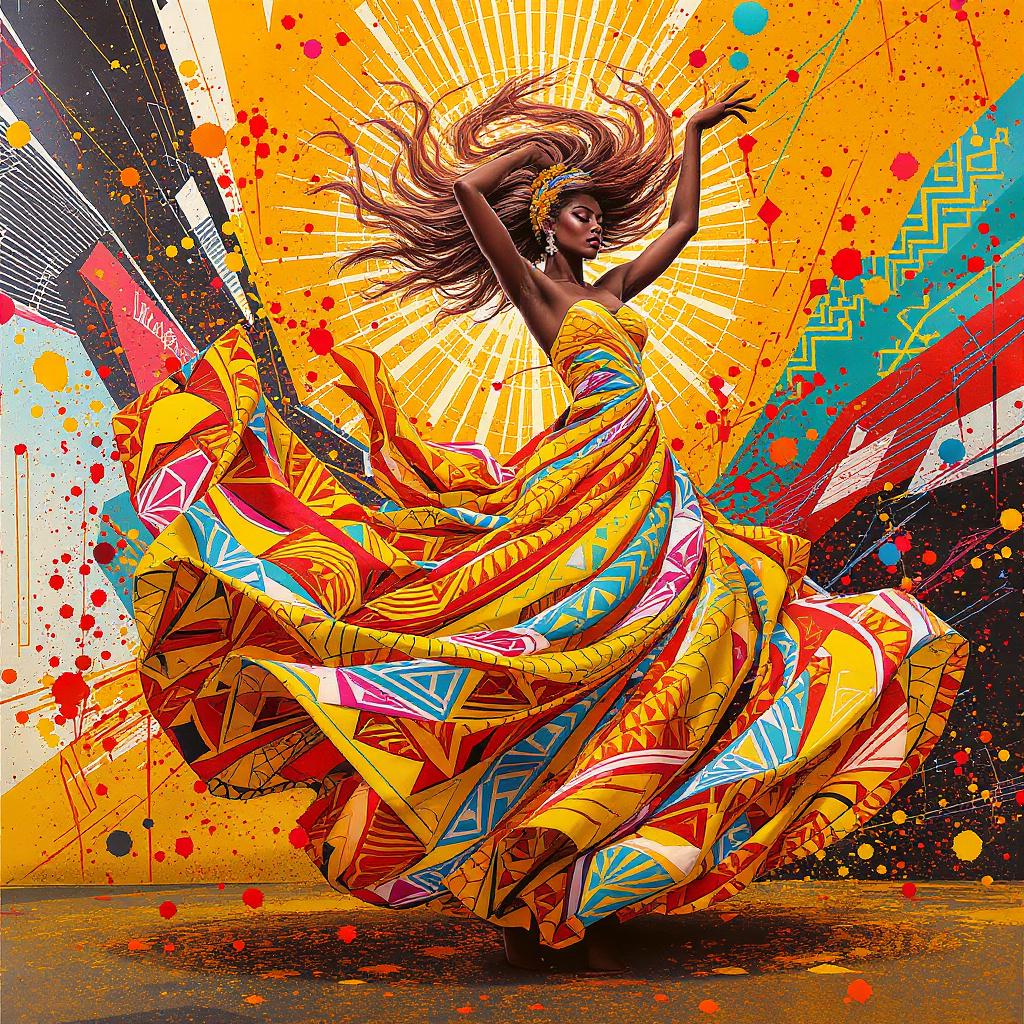
Alright. You get it. Or maybe you don’t. Where exactly is the line in the sand for what is art and what isn’t? The answer everyone loves to give is: it’s subjective.
People believe that right up until AI enters the conversation.
Now there are rules. Now there’s a purity test. And AI doesn’t pass the test.
So why are so many people up in arms about AI art? Because it’s fast? Because people think a computer made it?
I’ll tell you what I think: Art is a vessel for communicating thoughts, feelings, imagination, experience… It can come in any form, from any medium.
Now personally, I place art into two major categories: fine art and commercial art. I’d like to think I’ve produced both.
Here’s the thing though — fine art is explorative, imaginative, creative, inventive, and often completely unrecognizable to most people. That’s why most fine artists fit the “starving artist” stereotype. Pollock. Duchamp. Van Gogh. Rebels. They made what they wanted to make in the face of others, and later their genius was recognized. During their lives they were mocked, dismissed, and called frauds. Not to mention poor.
Can AI mimic their styles?
Sure.
But can it invent a completely new artistic movement born from personal suffering, obsession, and lived experience? Something so strange and original that the world initially rejects it?
No. At least not yet.
Fine art comes from a human life being lived. I don’t think AI art alone is fine art.
If you’re an artist that chooses the fine art path, don’t expect wealth, respect, or even people that “get it.” You probably won’t find it.
But then there’s the other category.
Commercial art.
This is almost everything else.
Commercial art is art made to be sold. Art made to be consumed. Art made for posters, album covers, product packaging, logos, Instagram feeds, Etsy shops, advertising campaigns, film, animation, video games, web design, living room walls…….
Can an artist make a living doing commercial art?
Yes. I’ve done it.
But let’s not kid ourselves about what it is.
Commercial art is competition.
You’re not making whatever strange thing your soul demands. You’re making something someone might buy. You’re making something recognizable, appealing, understandable to the greater population.
However, even great commercial artists are historically underpaid and undervalued.
They get tricked.
They get scammed.
They get persuaded into producing work for pennies because it will “look great in their portfolio.”
Exposure.
Portfolio pieces.
Future opportunities.
Artists have been hearing those words for decades.
People of lesser imagination use artists all. the. time.
They want the creative output, but they don’t want to pay for the years of practice, the skill, the taste, the vision, the thousands of hours it took to develop it.
So what happens?
Artists grind. They race each other to the bottom. They watch their jobs get outsourced to Indonesia. They compete for scraps in the commercial art world because that’s where the money, or at least the possibility of money lives.
Now along comes a new tool. And suddenly artists can produce commercial work at a pace that would have been impossible before.
It’s not that different from what happened when artists moved from paint to Photoshop. Or from drafting tables to Illustrator. Or from airbrush to digital tablets.
The tool changed.
The ideas didn’t.
It’s about producing something the consumer connects with.
AI places more power in the hands of the artist, not less. At least for those willing to learn how to use it.
Artists who embrace the tool can produce faster, experiment more, and bring more ideas into the world.
And frankly, I’m all for that.
As long as it’s used responsibly.
As long as people aren’t directly ripping off another artist’s style and pretending it’s their own.
But even that argument: the idea that AI is “stealing” deserves a little perspective.
I once had an art professor say something that stuck with me:
“All artists are thieves.”
Every artist studies the artists who came before them.
They borrow techniques.
They borrow compositions.
They borrow color palettes.
They borrow entire visual languages.
Van Gogh studied the Japanese woodblock prints.
Picasso studied African masks.
Every illustrator alive today has absorbed decades of visual culture.
Great artists aren’t the ones without influences.
They’re the ones who are better at hiding them.
The commercial art I produce sells. It’s clean. It’s simple. It’s what I think people will hang in their homes.
The fine art I produce?
Nobody gives a shit about it except me.
And that’s fine. I didn’t make it for them.
I can draw. I can paint. I can animate. I can use the pen tool in Illustrator to craft minimal vector designs. I can write code that generates millions of original artworks from hundreds of vector elements I designed myself. I can also write a prompt that brings a visual idea from my head into existence.
All of that is art.
They’re just different tools.
AI is a tool.
That’s it.
Some people get really upset because they spent their entire lives mastering a skill like drawing, only to watch AI reproduce that same skill in seconds.
And honestly, I get it.
But drawing is a skill.
It always has been.
And throughout history, tools have replaced skills.
The camera replaced portrait painters.
Digital illustration replaced airbrush studios.
Sampling replaced entire orchestras.
3D rendering replaced entire special effects departments.
Every generation of artists screams that the new tool is cheating.
Every single time.
And every single time, the tool just becomes part of the craft.
I used to draw with a pencil.
Then I used a mouse.
Then a pen tablet.
Then vector tools.
Then generative code.
Now AI.
Same brain. Different tools.
The idea is still mine.
And the idea is the art.
If your entire artistic identity is built on the difficulty of the tool, you were never competing on ideas in the first place.
You were competing on manual labor.
And automation has never been kind to manual labor.
Art survives.
Tools change.
Always have. Always will.

Leave a Reply