

I guess it makes sense to start with a quick recap of how I got here — before tech.
I started as an artist. An illustrator and animator. This might be hard to believe, but artists historically haven’t been paid very well. Which is ironic, considering they’re often the creative force behind so many things people actually care about. But more on that later.
In the mid-2000s, as an animator, I used a piece of software that’s mostly been buried by time — and Apple. For those that may remember, this software was Flash. It was intended for animation, but it turned out you could build some pretty cool websites with it too. There was no real standardization, and in hindsight Apple was probably right not to support SWF files when they launched the iPhone. But for a brief window of time, Flash websites ruled the internet.
During that window, I realized something important: I could make a lot more money building websites than producing animation. And I could do it from anywhere. I didn’t have to sit in an office for eight hours a day with somebody looking over my shoulder. So I pivoted — not that I knew what “pivoting” meant at the time. I just knew I wanted more freedom and more income, and Flash happened to be the path.
That’s how my journey into web design and development started.
I spent years refining my skills, mostly by trying to build a better portfolio website for myself. My work started getting featured on design sites and in magazines — remember those actual paper magazines people used to subscribe to? I became obsessed with logo design as well, and received similar recognition in that space. At that point in my career (and I use that term loosely), I identified as a designer.
Around 2008, I became aware of a blogging platform called WordPress. Some people had started hacking together themes with it to build full websites instead of just blogs. A friend suggested we start a WordPress theme company together, so we did. After months of intense work, we built our first four themes.
Then… nothing happened.
My partner hesitated to launch for reasons I won’t get into, and what we built just sat there collecting dust for months. During that time, I decided to build and release my own theme — the Structure Theme — as a free download. It unexpectedly took off. Hundreds of downloads per day. For a while, it felt like every random website I visited was using something I built.
Eventually, that momentum pushed us to finally launch our theme shop in early 2010, and the result was immediate traffic and sales.
The business grew quickly. But almost as quickly, my partner’s role as developer faded, and I picked up the slack. I became a self-taught front-end developer out of necessity. Designer, developer, artist — all rolled into one. WordPress themes (and eventually plugins) became my life for over twelve years. I personally built more than fifty products.
When you spend over a decade doing something repeatedly, you get very good at it. I became highly specialized — excellent at HTML and CSS, comfortable with PHP as it related to WordPress, and knowledgeable enough in JavaScript and jQuery to support the functionality my themes required. I wasn’t a traditional software engineer. I was a WordPress-focused builder — like many contributors to the platform.
Eventually, though, the theme market became saturated. WordPress itself went through major changes, and community sentiment shifted. Combined with personal and professional differences with my business partner, it felt like the right time to move on and explore new ideas.
That marked the beginning of a new chapter — one focused on freedom and building new things with new people.
It also marked my reluctant return to contract work.
I said yes to too many projects. For about a year, I found myself working day and night building things for other people — exactly the situation I didn’t want to be in again. One of those projects, in early 2025, was an extremely complex application for interfacing with a robot responsible for mixing and administering chemotherapy drugs. Completely out of left field for me. Multiple modules, complex workflows, regulatory considerations, and I was the sole frontend developer.
I was in over my head.
I had been an early adopter of AI tools, but mostly for art and assistance — not for development itself. My early experience was that AI-generated code was buggy and still required a lot of manual correction. But the scope of this project made it clear that I couldn’t do it alone. So I started leaning on AI more heavily.
At first, the workflow was clunky. I’d frame out problems manually, ask ChatGPT to help fill in gaps, copy and paste code, then debug. Slow, but helpful. Eventually I moved into Copilot inside VS Code, which was an improvement. Being able to reference files and directories gave the model better context. Still, results were mixed.
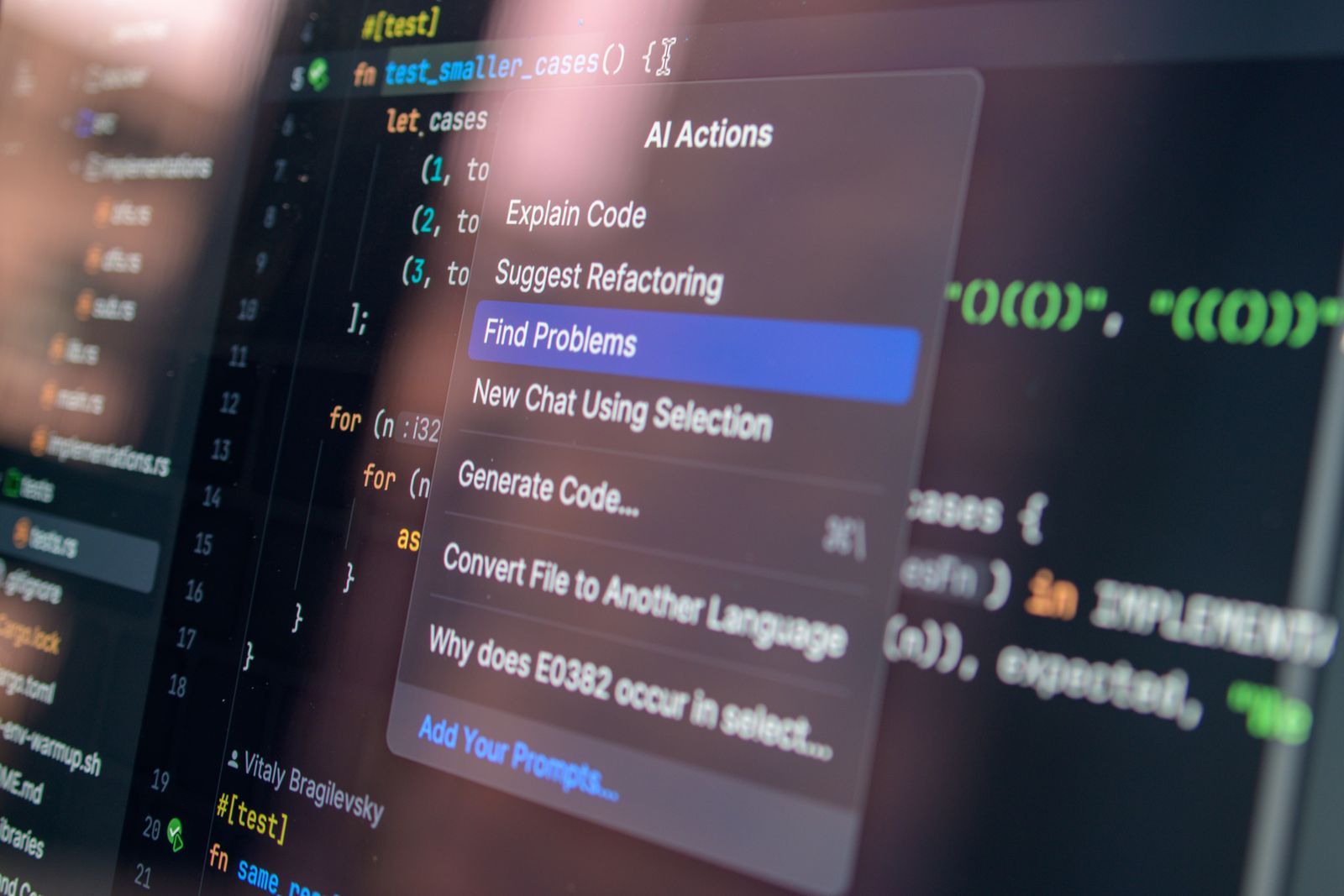
Then I discovered agent mode — where the model writes directly into your files.
That was my introduction to what people now call “vibe coding.”
I wasn’t going in blind. I had years of development experience. But it still led to the familiar loop many early AI developers know all too well: ask for changes, test, hit an error, feed the error back in, try again, repeat endlessly. It could be maddening. But it was still faster than writing everything by hand.
Around that time, I kept hearing developers talk about moving from VS Code to Cursor. Frustration eventually pushed me to try it, and it was a genuine turning point. The results were immediately better. And when I committed to using agent mode with Claude’s Sonnet model, everything accelerated.
Suddenly, I was building things far beyond what I had learned during fifteen years of WordPress-focused development. I was even finding bugs in backend code — things I was hesitant to point out because I didn’t want to be doing someone else’s job. But the bigger realization was this: I was no longer constrained by the WordPress ecosystem or my previous limitations.
The project eventually wrapped, and I shifted back to building things I wanted to build — now with a completely new set of tools and skills.
I started building Shopify apps to solve problems in my own print-on-demand business. But the real shift came more recently when I switched to the Opus 4.6 thinking model. The jump in capability was dramatic. I can now build and ship at a pace that simply wasn’t possible before.
And we’re only a few years into this.
After a lifetime spent moving between art, design, and development, here’s where I’ve landed.
The role of many senior developers — at least as it exists today — is going to change dramatically in the next few years. Developers who refuse to use AI out of principle are going to struggle to keep up. Not because they’re bad developers, but because the tools have fundamentally changed.
Some developers genuinely love writing code. I get that. There’s a flow state there. But it’s similar to how typists once took pride in typing speed, or mathematicians once relied on slide rules before calculators existed. The work changes. The tools evolve. The outcome matters more than the process.
There’s also a common argument that relying on AI will make us dumber. I don’t buy that. My raw coding skills might atrophy — and I’m okay with that. I don’t code for the sake of coding. I code to solve problems. If problems can be solved faster and more effectively with AI, that’s progress.
What I think actually wins in this new environment is creative thinking. As of now, AI is still powered by a human operator — and in this changing world, the operator behind the creation is left in the shadows while AI gets all the credit. But the human is the creative director.
The future isn’t large development teams moving slowly inside big organizations. It’s small teams — or individuals — building creative solutions quickly. And that brings me back to artists.
For years, I’ve had a frustration with how creatives are valued. Designers and artists are often paid the least, while senior developers command the highest salaries. But artists are trained to think differently. They ask how to create something new, how to combine ideas in ways that didn’t exist before. That kind of thinking becomes incredibly valuable when execution is no longer the bottleneck.
Very soon, creatives will be able to build what previously required entire development teams. And I’d argue many of them will build better experiences, because they naturally think about UI, UX, and human experience alongside functionality.
I think the AI future belongs to creative problem solvers.
Not code monkeys.
Leave a Reply